Key Takeaways
- In a phase III randomized controlled trial (Piraccini et al.), topical finasteride increased target-area hair count by +20.2 hairs vs. +6.7 hairs with placebo at 24 weeks, matching oral finasteride with lower systemic exposure.
- Available in fast-drying foams, precision dropper solutions, and overnight gels, topical finasteride is frequently paired with 5% minoxidil for dual-pathway regrowth.
- Around 97% of reported topical side effects are mild-to-moderate local scalp reactions, though patients must still monitor for mood or sexual changes and wash hands after application.
Androgenetic alopecia (male pattern hair loss) affects roughly half of men by age 50 and up to 80% by age 70 (1). For men seeking proven DHT blockade directly at the hair follicle with lower whole-body exposure than daily pills, topical finasteride has become a leading clinical option.
Formulations: foam, liquid dropper, or gel?
Topical finasteride blocks dihydrotestosterone (DHT) locally in scalp follicles so miniaturized hairs grow thicker and remain in their growth phase longer (4). Formulations include:
- Propylene-glycol-free foam (often compounded with minoxidil): Dries rapidly with minimal residue and lower rates of scalp itching, flaking, and contact dermatitis (2).
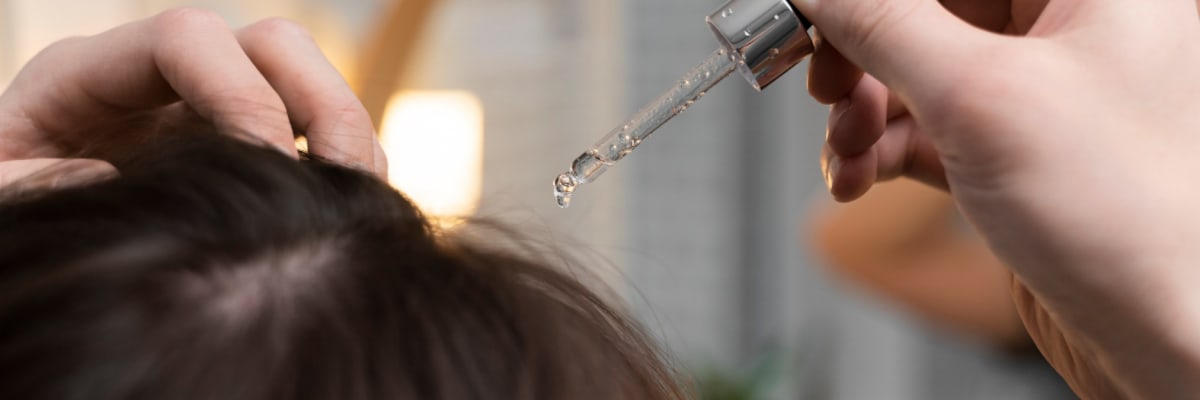
- Precision dropper solution: Uses carrier enhancers to drive finasteride directly into targeted crown or hairline follicles (3,5).
- Overnight gel or lotion: Applied before bed and washed out in the morning.
Apply once daily to a clean, dry scalp, allow to air-dry completely before styling or sleeping, and wash your hands thoroughly after every application — pregnant women or women planning pregnancy must never handle or come into contact with crushed or wet finasteride (6,7).
What phase III clinical trials show
In a landmark phase III randomized controlled trial by Piraccini et al. comparing 0.25% topical finasteride spray, oral finasteride 1mg, and placebo over 24 weeks, men using topical finasteride gained an average of +20.2 hairs per target area compared with +6.7 hairs on placebo — matching oral finasteride’s hair-count improvement while keeping plasma finasteride concentrations markedly lower (6,7).
Combining topical finasteride (to block follicle shrinkage) with 5% topical or low-dose oral minoxidil (to stimulate blood flow and anagen growth) often delivers stronger density improvements than monotherapy alone (2,5,10).
Side effects and safety precautions
Clinical data show roughly 97% of adverse events with topical finasteride are mild-to-moderate, predominantly local scalp itching, redness, or dryness (6,8). However, because a small amount can still enter circulation, regulatory agencies advise monitoring for systemic effects — including low mood, anxiety, reduced libido, or erectile changes (see our review of Post-Finasteride Syndrome) — and discontinuing immediately if mood changes occur (9).
References
- American Academy of Dermatology. Pattern hair loss (androgenetic alopecia) — diagnosis & treatment.
- Rossi A, Caro G. Efficacy of topical minoxidil and topical finasteride combination vs monotherapy. J Cosmet Dermatol. 2023;23(2):502–509.
- Farah HA, Brown MB, McAuley WJ. Enhanced Follicular Delivery of Finasteride to Human Scalp Skin. Pharm Res. 2020;37(6).
- Gupta AK, Talukder M. Topical finasteride for male and female pattern hair loss. J Cosmet Dermatol. 2022;21(5):1841–1848.
- Lubis FF, et al. RCT of topical 0.1% finasteride + 5% minoxidil in male androgenetic alopecia. Arch Dermatol Res. 2025;317(1):691.
- Piraccini BM, Blume-Peytavi U, et al. Efficacy and safety of topical finasteride spray solution: phase III RCT. J Eur Acad Dermatol Venereol. 2022;36(2):286–294.
- Estill MC, et al. Finasteride and Dutasteride Review of Efficacy and Reproductive Safety. Georgetown Med Rev. 2023.
- U.S. FDA. Safety considerations with compounded topical finasteride products. 2025.
- U.S. Food and Drug Administration. Propecia (finasteride) prescribing information — psychiatric adverse events. 2025.
- Messenger AG, Rundegren J. Minoxidil: mechanisms of action on hair growth. Br J Dermatol. 2004;150(2):186–194.