Medication Guide
General Disclaimer
These medications should always be used responsibly and after consultation with a qualified healthcare professional or primary care provider for diagnosis and treatment instructions before utilizing any medications in your kit. If you have any questions, Amble offers a team of licensed medical professionals to help.
Storage Information
Most solid oral drugs have a longer shelf life when stored at room temperature (68–77°F / 20–25°C) and shielded from UV radiation in airtight containers. The FDA's Shelf-Life Extension Program showed that many solid form medications stayed potent beyond their expiration date.
Legal Disclaimer
Medication Information
Prednisone
(generic Deltasone™)
Pharmacologic Category: Corticosteroid; glucocorticoid
FDA-Approved Uses:
- Allergic states
- Dermatologic diseases
- Endocrine disorders
- Gastrointestinal diseases
- Hematologic disorders
- Neoplastic diseases
- Nervous system conditions
- Ophthalmic diseases
- Renal diseases
- Respiratory diseases
- Rheumatic disorders
- Gout
- Moderate allergy/hives/angioedema
Common Off-Label Uses:
- Asthma or COPD exacerbation
- Acute allergic reactions (adjunctive)
- Acute gout flare
- Bell's palsy
- Radiculopathy or sciatica-associated inflammation
- Autoimmune or inflammatory condition flares
Typical Adult Dosing:
Gout flare: 4 tablets once daily until symptoms resolve (usually 2–5 days), then taper: 3 tablets daily × 2 days → 2 tablets daily × 2 days → 1 tablet daily × 2 days
Moderate allergy/hives/angioedema — stepwise approach:
- Cetirizine 10 mg once daily (may increase to twice daily if needed)or Cetirizine 10 mg in the morning + diphenhydramine 25–50 mg at bedtime
- If symptoms persist, add Famotidine 20 mg every 12 hours
- If symptoms still present, add Prednisone 4 tablets once daily until controlled, then taper: 3 tablets × 2 days → 2 tablets × 2 days → 1 tablet × 2 days (do not exceed 10 days total)
Pregnancy: Category C.
Breastfeeding: Discuss with your doctor whether benefits outweigh risks.
Notes: Do not combine with NSAIDs (ibuprofen, celecoxib, aspirin, etc.) — concurrent use increases risk of peptic ulcer disease and perforation.
Common Side Effects: Serious side effects (primarily with long-term use) include adrenal suppression, high blood pressure, electrolyte disturbances, heart rhythm disruption, psychiatric disturbances, Cushing's syndrome, peptic ulcer, hyperglycemia, osteoporosis, and glaucoma. Less common: acne, weight gain, nausea, headache, seizure, tendon rupture, impaired wound healing.
Contraindications: Allergy or hypersensitivity to prednisone. Active systemic fungal infection. Co-administration with live or live-attenuated vaccines. History of herpes simplex of the eye, measles, chickenpox, peptic ulcer, ulcerative colitis, diverticulitis, or uncontrolled viral/bacterial infection.
Caution: Use with caution in diabetes, hypertension, heart disease, kidney/liver disease, stomach ulcers, glaucoma, cataracts, osteoporosis, thyroid disease, seizure disorders, or mood disorders. Seek medical attention for severe mood changes, vision changes, black or bloody stools, severe abdominal pain, signs of infection, shortness of breath, or symptoms of high blood sugar.
Albuterol Sulfate
(generic ProAir™, Proventil™, Ventolin™)
Pharmacologic Category: Short-acting beta-2 adrenergic agonist; bronchodilator
FDA-Approved Uses:
Common Off-Label Uses:
- Shortness of breath
- Wheezing
- Cough
Typical Adult Dosing:
Asthma exacerbation, mild-to-moderate: 2–4 inhalations every 20 minutes for 3 doses. If good response, extend interval to every 3–4 hours as needed. If incomplete response, adjust interval to every 1–3 hours as needed.
Asthma exacerbation (as needed): 1–2 inhalations every 4–6 hours as needed.
COPD exacerbation: 1–2 inhalations every 1 hour for 2–3 doses, then every 2–4 hours as needed.
Patients with worsening symptoms after initial treatment should seek immediate medical attention.
Pregnancy: Category C.
Breastfeeding: Considered compatible with breastfeeding.
Notes: Albuterol is a rescue medication for rapid relief of bronchospasm (wheezing, chest tightness, shortness of breath, cough). Increasing use or needing more frequent doses may indicate worsening disease and should be evaluated by a medical provider. Prime inhaler before first use or after extended non-use. Albuterol does not replace controller medications such as inhaled corticosteroids when prescribed.
Common Side Effects: Excitement, nervousness, tremor, bronchospasm, asthma exacerbation, pharyngitis, rhinitis, upper respiratory tract infection.
Contraindications: Allergy or hypersensitivity to albuterol or any component of the formulation. Severe hypersensitivity to milk proteins (dry powder inhalers only).
Caution: May cause paradoxical bronchospasm, which can be life-threatening — discontinue and seek medical attention if breathing worsens after use. Use with caution in heart disease, arrhythmias, hypertension, hyperthyroidism, diabetes, seizure disorder, or low potassium. Overuse may increase the risk of serious adverse effects and may signal worsening respiratory disease.
DOXYCYCLINE HYCLATE 100 mg
Pharmacologic Category: Antibiotic, Tetracycline Derivative
FDA-Approved Uses:
- Acne vulgaris
- Anthrax due to Bacillus anthracis (bioterror)
- Amebiasis (parasite infection caused by Entamoeba histolytica)
- Sexually transmitted infections (caused by Chlamydia trachomatis)
- Malaria prophylaxis
- Rickettsia infections
- Rocky Mountain spotted fever (caused by Rickettsia rickettsii)
- Q Fever (caused by Coxiella burnetii)
- Typhus
Common Off-Label Uses:
- Lyme disease (vector-borne disease caused by Borrelia bacteria)
- Community-acquired pneumonia
- Acute bacterial rhinosinusitis (nasal passage & sinus infection)
- Skin and soft tissue infections due to Staph aureus
- Tularemia (Rabbit fever caused by bacterium Francisella tularensis, bioterror)
- Plague (caused by Yersinia pestis, bioterror)
Typical Adult Dosing:
Anthrax (bioterror), inhalation, postexposure prophylaxisTake Doxycycline 100 mg (1 capsule) by mouth TWICE A DAY for 42 to 60 days***Consult with a local expert for more information**Some experts favor longer durations (3–4 months)
Lyme disease, prophylaxis (asymptomatic exposure & Ixodes spp. tick attached for > 36 hours)Take Doxycycline 200 mg (2 capsules) by mouth ONCE
Lyme disease, treatment (symptomatic infection)Take Doxycycline 100 mg (1 capsule) by mouth TWICE A DAY for 10 to 28 days****Duration based on symptom presentation
- Treatment, erythema migrans: 10 days
- Treatment, acute neurological disease: 14–21 days
- Treatment, carditis: 14–21 days
- Treatment, arthritis with neurological involvement: 28 days
Rocky Mountain Spotted FeverTake Doxycycline 100 mg (1 capsule) by mouth TWICE A DAY for 5 to 7 days****or for at least 3 days after fever subsides, whichever is longer
Q fever, acute symptomatic infectionTake Doxycycline 100 mg (1 capsule) by mouth TWICE A DAY for 14 days
Bite wound (human and animal), prophylaxis (asymptomatic exposure)Take Doxycycline 100 mg (1 capsule) by mouth TWICE A DAY for 3–5 days
Bite wound (human and animal), treatment (symptomatic infection)Take Doxycycline 100 mg (1 capsule) by mouth TWICE A DAY for up to 14 days
Plague (Yersinia pestis), Tularemia (bioterror)Take Doxycycline 100 mg (1 capsule) by mouth TWICE A DAY for 7 days*Consult with a local expert for more information
Sexually transmitted infection (STI), caused by Chlamydia trachomatisTake Doxycycline 100 mg (1 capsule) by mouth TWICE A DAY for 7 days
Pregnancy: Pregnancy Risk Category D (see Appendix A). Many guidelines consider Doxycycline to be a relative contraindication in pregnant women. Consult with a medical provider.
Breastfeeding: Present in breastmilk, use caution. Consult with a medical provider.
Notes: Doxycycline is most effective when taken on an empty stomach. If stomach disturbance is a concern, may be taken with a meal, however, absorption may be decreased.
Common Side Effects: Gastrointestinal including diarrhea and nausea.
Contraindications: DO NOT TAKE if known allergy or hypersensitivity to Doxycycline, other tetracyclines, or any other component of the formulation; concurrent use of isotretinoin.
Caution: Significant drug interactions exist and may require dose/frequency adjustment or avoidance. Prolonged use (>28 days) of antibiotics may result in fungal or bacterial superinfection. Doxycycline use may exacerbate the neuromuscular disorder myasthenia gravis.
Please review full package insert and consult with a medical provider for additional information.
IPRATROPIUM BROMIDE (0.02%)
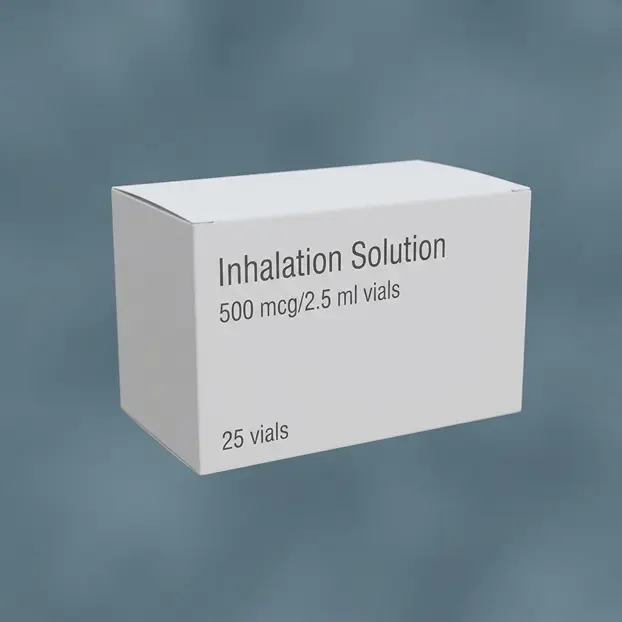
Inhalation solution for nebulizer — kit typically 25 vials × 2.5 mL (500 mcg / 2.5 mL)Source: DailyMed Ipratropium Bromide Inhalation Solution 0.02% (FDA label)
Pharmacologic Category: Anticholinergic (parasympatholytic) bronchodilator; inhaled
FDA-Approved Uses:
- Maintenance treatment of bronchospasm associated with COPD, including chronic bronchitis and emphysema (alone or with other bronchodilators)
Common Off-Label Uses:
- Acute asthma / bronchospasm as adjunct to albuterol (provider-directed)
- Acute COPD exacerbation as adjunct therapy (provider-directed)
Typical Adult Dosing:
COPD maintenance (usual labeled dose)Nebulize 1 unit-dose vial (500 mcg / 2.5 mL of 0.02% solution) by mouthpiece or mask 3 to 4 times daily, with doses 6 to 8 hours apart.
May be mixed in the nebulizer with albuterol if used within one hour (per label). Drug stability/safety when mixed with other drugs has not been fully established for all combinations.
Not adequately studied as single-agent rescue for acute COPD exacerbation — faster-onset agents (e.g., albuterol) are generally preferred first.
Pregnancy: Pregnancy Risk Category B (see Appendix A). Use during pregnancy only if clearly needed. Discuss with a medical provider.
Breastfeeding: It is not known whether ipratropium is excreted in human milk. Discuss with a medical provider.
Notes: For oral inhalation via nebulizer only — not for injection or eye use. Protect eyes from mist (use mouthpiece preferred over poorly fitting mask). Keep unused vials in foil pouch; protect from light. Store at room temperature per label.
Common Side Effects: Bronchitis, dyspnea/shortness of breath, cough, upper respiratory tract infection, headache, dry mouth, nausea. Less common: tachycardia, palpitations, urinary retention, eye pain, blurred vision.
Contraindications: Known or suspected hypersensitivity to ipratropium bromide, atropine, or atropine derivatives, or any component of the formulation.
Caution: Avoid getting solution in the eyes — may cause mydriasis, blurred vision, eye pain, or precipitate/worsen narrow-angle glaucoma. Immediate hypersensitivity reactions (urticaria, angioedema, rash, bronchospasm, oropharyngeal edema) can occur. Use caution in patients with narrow-angle glaucoma, prostatic hyperplasia, or bladder-neck obstruction. Seek emergency care if breathing worsens after treatment, facial/tongue swelling, or severe eye pain occurs.
Please review the full package insert and consult with a medical provider.
Cetirizine
(generic Zyrtec™)
Pharmacologic Category: Antihistamine
FDA-Approved Uses:
- Allergic Rhinitis or Conjunctivitis
Common Off-Label Uses:
- Allergic Reaction
- Angioedema
- Hives
Typical Adult Dosing:
Allergic Rhinitis or Conjunctivitis:1 pill by mouth once daily as needed
Mild to Moderate Allergic Reaction, Angioedema, Hives:Cetirizine: 10 mg by mouth 1 time per day. May increase to 2 times per day if neededORCetirizine: 10 mg by mouth 1 time in the morning, plus diphenhydramine 25-50 mg by mouth at bedtimeIf symptoms still present then add, Famotidine: 20 mg by mouth every 12 hoursIf symptoms still present then add a corticosteroid, Methylprednisolone: follow directions per medication label
Pregnancy: Pregnancy Risk Category B (see Appendix A)
Breastfeeding: Discuss with your doctor if the benefits of taking this medication outweigh the risks.
Notes: Cetirizine may cause drowsiness, although it is generally considered less sedating than first-generation antihistamines. Avoid alcoholic drinks while taking cetirizine. Alcohol, sedatives, and tranquilizers may increase drowsiness. Use caution when driving a motor vehicle or operating machinery. Ask a medical provider before use if you have liver or kidney disease, as a different dose may be needed.
Common Side Effects: Serious side effects include sedation, fatigue, and psychosis. Other side effects include: drowsiness, headache, abdominal pain, diarrhea, vomiting, dry mouth, dizziness, bronchospasm, chest pain, skin changes, weight gain, heavy menstrual bleeding, urinary frequency, joint pain, visual changes, hearing changes, etc.
Contraindications: Allergy or hypersensitivity to cetirizine, hydroxyzine, levocetirizine, or any component of formulation. Allergy or hypersensitivity to piperazine derivatives. History of severe kidney impairment.
Caution: Caution with alcohol, sedatives, tranquilizers, sleep medications, opioids, benzodiazepines, or other medications that may cause drowsiness. Caution in patients with kidney disease, liver disease, urinary retention, enlarged prostate, or elderly patients due to possible increased risk of side effects. Stop use and seek medical help right away if an allergic reaction occurs. Do not exceed the recommended dose unless directed by a medical provider.
MONTELUKAST
(generic Singulair™) — kit strength typically 10 mg tabletsSource: DailyMed Montelukast Sodium tablets + FDA boxed warning (2020)
Pharmacologic Category: Leukotriene receptor antagonist
FDA-Approved Uses:
- Prophylaxis and chronic treatment of asthma (age ≥15 for 10 mg tablets)
- Prevention of exercise-induced bronchoconstriction (age ≥15)
- Seasonal and perennial allergic rhinitis (age ≥15) — reserve for patients with inadequate response or intolerance to alternative therapies because of neuropsychiatric risk
Common Off-Label Uses:
- Adjunct therapy in selected allergic / eosinophilic airway conditions as directed by a medical provider
Typical Adult Dosing:
Asthma (chronic / prophylaxis)Take Montelukast 10 mg by mouth once daily in the evening, with or without food.
Allergic rhinitisTake Montelukast 10 mg by mouth once daily (timing may be individualized); for patients with both asthma and allergic rhinitis, take only one 10 mg dose daily in the evening.
Exercise-induced bronchoconstrictionTake Montelukast 10 mg by mouth at least 2 hours before exercise. Do not take an additional dose within 24 hours of a previous dose.
Not for relief of an acute asthma attack — keep a rescue inhaler (e.g., albuterol) available.
Pregnancy: Discuss risks and benefits with a medical provider. Current labeling uses narrative pregnancy risk information (see Appendix A / PLLR).
Breastfeeding: Montelukast is present in human milk. Discuss with a medical provider whether benefits outweigh risks.
Notes:
BOXED WARNING — Serious neuropsychiatric events have been reported, including agitation, aggression, depression, sleep disturbances, suicidal thoughts and behavior (including suicide). Advise patients/caregivers to monitor for behavior or mood changes. Discontinue immediately and contact a healthcare provider if neuropsychiatric symptoms occur. Benefits may not outweigh risks for mild allergic rhinitis treatable with other therapies.
Common Side Effects: Upper respiratory infection, fever, headache, sore throat, cough, abdominal pain, diarrhea, otitis, influenza, runny nose. Postmarketing: neuropsychiatric events (see above), hypersensitivity reactions, hepatic eosinophilic infiltration (rare), Churg-Strauss–like eosinophilic vasculitis presentations (rare; often with steroid taper).
Contraindications: Hypersensitivity to montelukast or any component of the formulation.
Caution: Do not use to treat acute asthma attacks or status asthmaticus. Continue aspirin/NSAID avoidance in aspirin-sensitive asthmatics. Monitor for neuropsychiatric symptoms during and after treatment. Seek care for mood/behavior changes, suicidal thoughts, worsening breathing, rash with systemic symptoms, or signs of eosinophilic disease.
Please review the full package insert and Medication Guide and consult with a medical provider.
Appendix A: Pregnancy, Lactation, and Reproductive Potential Labeling
Purpose of This Appendix
This appendix summarizes how pregnancy, breastfeeding, and reproductive potential information should be interpreted in medication education materials. This appendix is based on the FDA Pregnancy and Lactation Labeling Rule (PLLR) framework for prescription drug labeling.
The FDA no longer uses the pregnancy letter categories A, B, C, D, and X in current prescription drug labeling. These categories were removed because they were considered confusing and overly simplistic and did not adequately communicate medication risk during pregnancy, lactation, or reproductive decision-making.
Current FDA labeling uses narrative risk information to help healthcare providers assess benefit and risk and counsel pregnant patients, breastfeeding patients, and patients of reproductive potential.
8.1 Pregnancy
Under current FDA labeling, the Pregnancy subsection may include the following elements when applicable:
Pregnancy Exposure RegistryIf a pregnancy exposure registry exists for a medication, labeling may include information about the registry and how pregnant patients may enroll or obtain additional information.
Risk SummaryThe pregnancy risk summary provides a concise summary of what is known about medication use during pregnancy. It may include available human data, animal data, and pharmacologic information when relevant.
The risk summary may address whether available data identify a drug-associated risk of major birth defects, miscarriage, or adverse maternal or fetal outcomes.
Clinical ConsiderationsThis section may include clinically relevant information such as:
- Disease-associated maternal and/or embryo/fetal risk
- Dose adjustments during pregnancy and postpartum period
- Maternal adverse reactions
- Fetal/neonatal adverse reactions
- Labor or delivery considerations when applicable
DataThis section may summarize the human and/or animal data supporting the risk summary.
8.2 Lactation
Under current FDA labeling, the Lactation subsection may include the following elements when applicable:
Risk SummaryThe lactation risk summary may describe:
- Whether the medication is present in human milk
- Whether the medication affects the breastfed child
- Whether the medication affects milk production
- Relevant human or animal lactation data, if available
When human lactation data are available, FDA labeling gives priority to human data over animal data. If breastfeeding is contraindicated, that information should be stated first in the risk summary.
Clinical ConsiderationsThis section may include recommendations for minimizing exposure, monitoring the breastfed child, or managing potential adverse reactions when applicable.
DataThis section may summarize available human or animal lactation data, including measured drug levels in milk or infant exposure estimates when available.
8.3 Females and Males of Reproductive Potential
Under current FDA labeling, this subsection may include information about:
- Pregnancy testing
- Contraception
- Infertility
This section is included when a medication may affect pregnancy status, fertility, embryo-fetal development, or reproductive decision-making.
Legacy Pregnancy Letter Categories
The FDA has removed the pregnancy letter categories A, B, C, D, and X from prescription drug labeling. These categories may still appear in older reference materials, older product labels, or legacy clinical documents, but they are not the current FDA labeling standard.
When a legacy category appears in this medication guide, it should be interpreted only as historical labeling language. Current prescribing information should be reviewed for the most up-to-date pregnancy risk summary.
Legacy Category AAdequate and well-controlled studies in pregnant women failed to demonstrate a risk to the fetus in the first trimester, and there is no evidence of risk in later trimesters.
Legacy Category BAnimal reproduction studies failed to demonstrate fetal risk, but there are no adequate and well-controlled studies in pregnant women.orAnimal studies showed an adverse effect, but adequate and well-controlled studies in pregnant women failed to demonstrate fetal risk.
Legacy Category CAnimal reproduction studies showed an adverse effect on the fetus, and there are no adequate and well-controlled studies in humans.orNo animal reproduction studies and no adequate and well-controlled studies in humans are available.
Potential benefits may warrant use in pregnant women despite potential risks.
Legacy Category DThere is positive evidence of human fetal risk based on adverse reaction data from investigational or marketing experience or studies in humans.
Potential benefits may warrant use in pregnant women despite potential risks.
Legacy Category XStudies in animals or humans demonstrated fetal abnormalities.orThere is positive evidence of human fetal risk based on adverse reaction data from investigational or marketing experience or studies in humans.
The risks involved in use during pregnancy clearly outweigh potential benefits.
Standard Pregnancy Language for Medication Sheets
Use one of the following FDA-aligned language structures when drafting medication sheets:
When current labeling provides a clear pregnancy risk statementPregnancy: Current labeling states [insert label-based risk summary]. Consult with a medical provider before use during pregnancy.
When human pregnancy data are limitedPregnancy: Available human data are limited and are not sufficient to establish a drug-associated risk. Use during pregnancy only if the potential benefit justifies the potential risk. Consult with a medical provider.
When medication should be avoided at a specific pregnancy stagePregnancy: Avoid use during [insert trimester/week range] unless specifically advised by a medical provider due to [insert label-supported risk]. Consult with a medical provider.
When medication is contraindicated in pregnancyPregnancy: Use is contraindicated during pregnancy. Do not use if pregnant or planning to become pregnant unless labeling or a medical provider specifically indicates otherwise.
Standard Breastfeeding Language for Medication Sheets
Use one of the following FDA-aligned language structures when drafting medication sheets:
When medication presence in human milk is unknownBreastfeeding: It is not known whether this medication is present in human milk, whether it affects the breastfed infant, or whether it affects milk production. Consult with a medical provider before use while breastfeeding.
When medication is present in human milkBreastfeeding: This medication is present in human milk. The developmental and health benefits of breastfeeding should be considered along with the mother's clinical need for treatment and any potential adverse effects on the breastfed child. Consult with a medical provider.
When medication is expected to produce low infant exposureBreastfeeding: Available data suggest infant exposure through breastmilk is expected to be low. Consult with a medical provider before use while breastfeeding, especially when nursing a newborn or preterm infant.
When breastfeeding is not recommendedBreastfeeding: Breastfeeding is not recommended during treatment with this medication and for [insert duration, if specified in labeling] after the last dose. Consult with a medical provider for individualized guidance.
When breastfeeding is contraindicatedBreastfeeding: Use is contraindicated during breastfeeding. Do not breastfeed during treatment unless current prescribing information or a medical provider specifically indicates otherwise.
Standard Disclaimer
This appendix is for medication education and labeling consistency only. It does not provide medical advice, diagnose any condition, recommend treatment, or replace the full prescribing information, product label, FDA-approved labeling, or guidance from a licensed medical provider. Current prescribing information should be reviewed because pregnancy, lactation, and reproductive-risk information may change as new data become available.
Inhalation solution for nebulizer — kit typically 25 vials × 2.5 mL (500 mcg / 2.5 mL)Source: DailyMed Ipratropium Bromide Inhalation Solution 0.02% (FDA label)
Pharmacologic Category: Anticholinergic (parasympatholytic) bronchodilator; inhaled
FDA-Approved Uses:
- Maintenance treatment of bronchospasm associated with COPD, including chronic bronchitis and emphysema (alone or with other bronchodilators)
Common Off-Label Uses:
- Acute asthma / bronchospasm as adjunct to albuterol (provider-directed)
- Acute COPD exacerbation as adjunct therapy (provider-directed)
Typical Adult Dosing:
COPD maintenance (usual labeled dose)Nebulize 1 unit-dose vial (500 mcg / 2.5 mL of 0.02% solution) by mouthpiece or mask 3 to 4 times daily, with doses 6 to 8 hours apart.
May be mixed in the nebulizer with albuterol if used within one hour (per label). Drug stability/safety when mixed with other drugs has not been fully established for all combinations.
Not adequately studied as single-agent rescue for acute COPD exacerbation — faster-onset agents (e.g., albuterol) are generally preferred first.
Pregnancy: Pregnancy Risk Category B (see Appendix A). Use during pregnancy only if clearly needed. Discuss with a medical provider.
Breastfeeding: It is not known whether ipratropium is excreted in human milk. Discuss with a medical provider.
Notes: For oral inhalation via nebulizer only — not for injection or eye use. Protect eyes from mist (use mouthpiece preferred over poorly fitting mask). Keep unused vials in foil pouch; protect from light. Store at room temperature per label.
Common Side Effects: Bronchitis, dyspnea/shortness of breath, cough, upper respiratory tract infection, headache, dry mouth, nausea. Less common: tachycardia, palpitations, urinary retention, eye pain, blurred vision.
Contraindications: Known or suspected hypersensitivity to ipratropium bromide, atropine, or atropine derivatives, or any component of the formulation.
Caution: Avoid getting solution in the eyes — may cause mydriasis, blurred vision, eye pain, or precipitate/worsen narrow-angle glaucoma. Immediate hypersensitivity reactions (urticaria, angioedema, rash, bronchospasm, oropharyngeal edema) can occur. Use caution in patients with narrow-angle glaucoma, prostatic hyperplasia, or bladder-neck obstruction. Seek emergency care if breathing worsens after treatment, facial/tongue swelling, or severe eye pain occurs.
Please review the full package insert and consult with a medical provider.
Appendix A: Pregnancy, Lactation, and Reproductive Potential Labeling
Purpose of This Appendix
This appendix summarizes how pregnancy, breastfeeding, and reproductive potential information should be interpreted in medication education materials. This appendix is based on the FDA Pregnancy and Lactation Labeling Rule (PLLR) framework for prescription drug labeling.
The FDA no longer uses the pregnancy letter categories A, B, C, D, and X in current prescription drug labeling. These categories were removed because they were considered confusing and overly simplistic and did not adequately communicate medication risk during pregnancy, lactation, or reproductive decision-making.
Current FDA labeling uses narrative risk information to help healthcare providers assess benefit and risk and counsel pregnant patients, breastfeeding patients, and patients of reproductive potential.
8.1 Pregnancy
Under current FDA labeling, the Pregnancy subsection may include the following elements when applicable:
Pregnancy Exposure RegistryIf a pregnancy exposure registry exists for a medication, labeling may include information about the registry and how pregnant patients may enroll or obtain additional information.
Risk SummaryThe pregnancy risk summary provides a concise summary of what is known about medication use during pregnancy. It may include available human data, animal data, and pharmacologic information when relevant.
The risk summary may address whether available data identify a drug-associated risk of major birth defects, miscarriage, or adverse maternal or fetal outcomes.
Clinical ConsiderationsThis section may include clinically relevant information such as:
- Disease-associated maternal and/or embryo/fetal risk
- Dose adjustments during pregnancy and postpartum period
- Maternal adverse reactions
- Fetal/neonatal adverse reactions
- Labor or delivery considerations when applicable
DataThis section may summarize the human and/or animal data supporting the risk summary.
8.2 Lactation
Under current FDA labeling, the Lactation subsection may include the following elements when applicable:
Risk SummaryThe lactation risk summary may describe:
- Whether the medication is present in human milk
- Whether the medication affects the breastfed child
- Whether the medication affects milk production
- Relevant human or animal lactation data, if available
When human lactation data are available, FDA labeling gives priority to human data over animal data. If breastfeeding is contraindicated, that information should be stated first in the risk summary.
Clinical ConsiderationsThis section may include recommendations for minimizing exposure, monitoring the breastfed child, or managing potential adverse reactions when applicable.
DataThis section may summarize available human or animal lactation data, including measured drug levels in milk or infant exposure estimates when available.
8.3 Females and Males of Reproductive Potential
Under current FDA labeling, this subsection may include information about:
- Pregnancy testing
- Contraception
- Infertility
This section is included when a medication may affect pregnancy status, fertility, embryo-fetal development, or reproductive decision-making.
Legacy Pregnancy Letter Categories
The FDA has removed the pregnancy letter categories A, B, C, D, and X from prescription drug labeling. These categories may still appear in older reference materials, older product labels, or legacy clinical documents, but they are not the current FDA labeling standard.
When a legacy category appears in this medication guide, it should be interpreted only as historical labeling language. Current prescribing information should be reviewed for the most up-to-date pregnancy risk summary.
Legacy Category AAdequate and well-controlled studies in pregnant women failed to demonstrate a risk to the fetus in the first trimester, and there is no evidence of risk in later trimesters.
Legacy Category BAnimal reproduction studies failed to demonstrate fetal risk, but there are no adequate and well-controlled studies in pregnant women.orAnimal studies showed an adverse effect, but adequate and well-controlled studies in pregnant women failed to demonstrate fetal risk.
Legacy Category CAnimal reproduction studies showed an adverse effect on the fetus, and there are no adequate and well-controlled studies in humans.orNo animal reproduction studies and no adequate and well-controlled studies in humans are available.
Potential benefits may warrant use in pregnant women despite potential risks.
Legacy Category DThere is positive evidence of human fetal risk based on adverse reaction data from investigational or marketing experience or studies in humans.
Potential benefits may warrant use in pregnant women despite potential risks.
Legacy Category XStudies in animals or humans demonstrated fetal abnormalities.orThere is positive evidence of human fetal risk based on adverse reaction data from investigational or marketing experience or studies in humans.
The risks involved in use during pregnancy clearly outweigh potential benefits.
Standard Pregnancy Language for Medication Sheets
Use one of the following FDA-aligned language structures when drafting medication sheets:
When current labeling provides a clear pregnancy risk statementPregnancy: Current labeling states [insert label-based risk summary]. Consult with a medical provider before use during pregnancy.
When human pregnancy data are limitedPregnancy: Available human data are limited and are not sufficient to establish a drug-associated risk. Use during pregnancy only if the potential benefit justifies the potential risk. Consult with a medical provider.
When medication should be avoided at a specific pregnancy stagePregnancy: Avoid use during [insert trimester/week range] unless specifically advised by a medical provider due to [insert label-supported risk]. Consult with a medical provider.
When medication is contraindicated in pregnancyPregnancy: Use is contraindicated during pregnancy. Do not use if pregnant or planning to become pregnant unless labeling or a medical provider specifically indicates otherwise.
Standard Breastfeeding Language for Medication Sheets
Use one of the following FDA-aligned language structures when drafting medication sheets:
When medication presence in human milk is unknownBreastfeeding: It is not known whether this medication is present in human milk, whether it affects the breastfed infant, or whether it affects milk production. Consult with a medical provider before use while breastfeeding.
When medication is present in human milkBreastfeeding: This medication is present in human milk. The developmental and health benefits of breastfeeding should be considered along with the mother's clinical need for treatment and any potential adverse effects on the breastfed child. Consult with a medical provider.
When medication is expected to produce low infant exposureBreastfeeding: Available data suggest infant exposure through breastmilk is expected to be low. Consult with a medical provider before use while breastfeeding, especially when nursing a newborn or preterm infant.
When breastfeeding is not recommendedBreastfeeding: Breastfeeding is not recommended during treatment with this medication and for [insert duration, if specified in labeling] after the last dose. Consult with a medical provider for individualized guidance.
When breastfeeding is contraindicatedBreastfeeding: Use is contraindicated during breastfeeding. Do not breastfeed during treatment unless current prescribing information or a medical provider specifically indicates otherwise.
Standard Disclaimer
This appendix is for medication education and labeling consistency only. It does not provide medical advice, diagnose any condition, recommend treatment, or replace the full prescribing information, product label, FDA-approved labeling, or guidance from a licensed medical provider. Current prescribing information should be reviewed because pregnancy, lactation, and reproductive-risk information may change as new data become available.