Key Takeaways
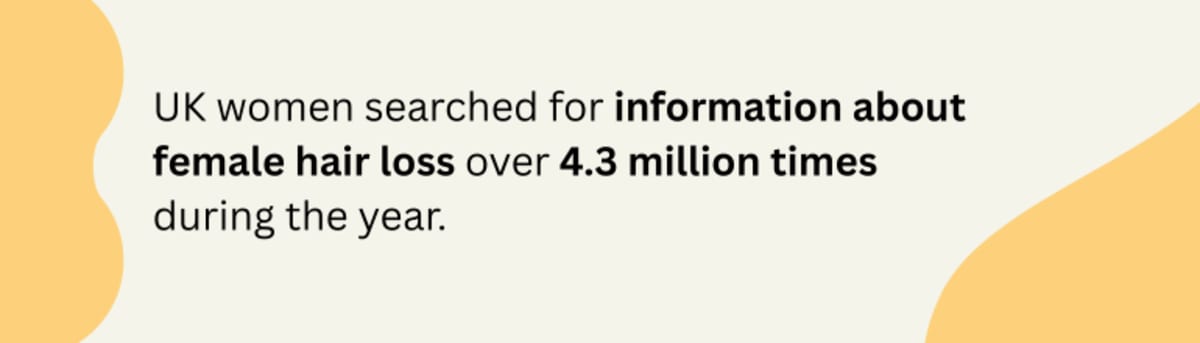
- Search analysis across 800+ terms reveals over 4.3 million annual searches on female hair loss, including 1.8 million focused on root causes and diagnosis.
- Surveys indicate up to 75% of women experience hair thinning during their lifetime, with 55% reporting an impact on self-confidence.
- Accurate diagnosis matters: female pattern hair loss responds to topical minoxidil, whereas postpartum, stress-related, menopausal, or iron-deficiency shedding require targeted care.
While male pattern baldness dominates public conversation, hair thinning in women often feels unexpected and isolating. Search-behavior research analyzing more than 800 hair-health queries between 2025 and 2026 found over 4.3 million annual searches by women seeking clarity on why their hair is shedding and what actually works.
Three insights from female hair-health search data
1. Hair thinning in women is far more common than assumed
Population surveys report that up to 75% of women experience hair thinning at some stage of life, with 55% noting reduced confidence and 26% reporting strain on relationships (1).

2. Women want root-cause answers before picking a product
While 2.5 million searches explored treatments such as minoxidil, nearly 1.8 million focused on underlying causes and symptoms — reflecting growing awareness of postpartum recovery, perimenopause, thyroid health, and iron stores.
3. Six distinct conditions can mimic one another
Because shedding patterns overlap, identifying the trigger is essential (1–6):
- Telogen effluvium (stress or rapid weight change): Temporary diffuse shedding triggered 2–3 months after physiological or emotional stress.
- Postpartum hair shedding: Affects over 90% of new mothers as estrogen normalizes after childbirth (2).
- Iron (ferritin) & B12 deficiency: Low serum ferritin stores frequently drive diffuse thinning in menstruating women (3).
- Perimenopause & menopause: Declining estrogen shifts the follicle estrogen-to-androgen balance (4).
- Female pattern hair loss (androgenetic alopecia): Gradual widening along the central part; topical minoxidil is the primary licensed treatment (5).
- Alopecia areata: Autoimmune patchy hair loss requiring medical dermatology assessment (6).
Early clinical guidance helps check ferritin, thyroid, and hormonal contributors so you treat the true cause rather than guessing alone.
References
- American Academy of Dermatology. Hair loss in women: diagnosis & treatment.
- Hirose A, et al. Investigation of exacerbating factors for postpartum hair loss. Int J Womens Dermatol. 2023;9(2):e084.
- Thamotharan N, et al. Assessment of Serum Ferritin Levels in Female Patients With Telogen Effluvium. Cureus. 2025.
- Huang Z, et al. Alleviating hair loss in menopausal women: review. Front Pharmacol. 2025;16.
- American Academy of Dermatology. Female pattern hair loss (androgenetic alopecia).
- Harries M, et al. Epidemiology of alopecia areata in primary care. Br J Dermatol. 2021.